Kate Grandbois: Welcome to SLP nerd cast your favorite professional resource for evidence based practice in speech, language pathology. I'm Kate grant wa and I'm Amy
Amy Wonkka: Wonka. We are both speech, language pathologists working in the field and co-founders of SLP nerd cast. Each
Kate Grandbois: episode of this podcast is a course offered for ashes EU.
Our podcast audio courses are here to help you level up your knowledge and earn those professional development hours that you need. This course. Plus the corresponding short post test is equal to one certificate of attendance to earn CEUs today and take the post test. After this session, follow the link provided in the show notes or head to SLP ncast.com.
Amy Wonkka: Before we get started one quick, disclaimer, our courses are not meant to replace clinical. We do not endorse products, procedures, or other services mentioned by our guests, unless otherwise
Kate Grandbois: specified. We hope you enjoy
Announcer: the course. Are you an SLP related [00:01:00] professional? The SLP nerd cast unlimited subscription gives members access to over 100 courses, offered for ashes, EU, and certificates of attendance.
With SLP nerd cast membership, you can earn unlimited EU all year at any time. SLP nerd cast courses are unique evidence based with a focus on information that is useful. When you join SLP nerd cast as a member, you'll have access to the best online platform for continuing education and speech and language pathology.
Join as a member today and save 10% using code nerd caster 10. A link for membership is in the show notes
Sponsor 1
Episode
Kate Grandbois: Hello, everyone. Welcome to SLP Nerdcast. We are very excited for today's episode, which I feel like was a long time in the making. Um, and we're very, very grateful to [00:02:00] welcome Dr. Kim Ho and Sarah Young. Welcome, Kim and Sarah. Thanks so much for having us Kim and Sarah, you are here to discuss AAC Family Camp: Radical Inclusion of Autistic AAC Users.
Amy Wonkka: And before we get started, can you please both just tell us a little bit about yourselves?
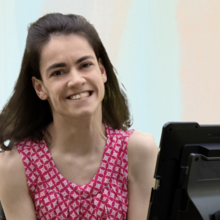
Sara Young: My name is Sarah, and I am an experienced device user. Let me tell you a little about myself. I have athetoid quadriplegic cerebral palsy from a birth injury. I live in Lowell, MA. I have a job which I truly love. I am a consultant at a school I am a [00:03:00] long time AAC user and have been using AAC since I was four years old. I've been a member of the Zeno Mountain Farm community for five years. I am a speaker through the Assisting Speaker Connection. I am employed as an AAC consultant for the Educational Collaborative in Walpole, Massachusetts. I am the co-director of the AAC Camp at Zeno Mountain Farm
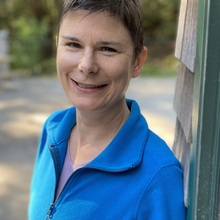
Kim Ho: And I am a neurodivergent speech pathologist and mother of neurodivergent kids.
I have an AAC specialty certification through ASHA, and I'm an assistant clinical professor at Northeastern, where I teach the AAC class and a neurodiversity class, and I also supervise in the clinic. And I primarily see my favorite population, which is AAC users, as well as autistic people who have either [00:04:00] part-time or full-time AAC needs.
And I bring students to Zeno Mountain Farm every summer as a clinical placement, and that's my favorite part of the year. So I'll bring three or four students for the first two weeks, and three or four for the last two weeks. And I also have a brother with disabilities who passed on, but he's the one who connected me originally with the camp life.
Kate Grandbois: That's wonderful. We're so excited to have you both here. Um, as many of our listeners probably already know from reading the description, we are here to talk about your experiences with camp. Um, and before we get into the detail, I am gonna be reading our learning objectives, and then we will get started.
Uh, learning objective number one: describe at least three barriers faced by minimally speaking autistic individuals with intellectual disabilities in accessing [00:05:00] recreational programs, and identify how a camp-based model addresses each barrier. Learning objective number two: explain the rationale for embedding partner-augmented input training within naturalistic, leisure-based activities, and identify at least two evidence-based strategies for teaching- Mm-hmm
communication partners to model AAC. And learning objective number three: apply key principles of neuro-affirming care, client-centered AAC practices, including respectful multimodal communication and following the AAC user's lead to their own clinical or educational settings. Uh, for anyone listening who would like to learn more about our financial and non-financial disclosures of both the hosts and the presenters today, those will be listed in the show notes as well as on our landing page.
And if anyone is using today's course for ASHA CEUs, that information will also be listed on the [00:06:00] landing page, and you can find the link to that in the show notes as well
Amy, I think that's you
Amy Wonkka: Oh, that is me. Kim and Sarah, why don't you start us off by telling us a little bit about the first learning objective?
Kate Grandbois: Yeah, so what is family camp like? Tell us about AAC camp.
Kim Ho: All right, well, fir- first I think it's a good idea for, to have Sarah just back up and tell us about just Zeno Mountain Farm.
Sara Young: First, let me tell you about Zeno Mountain Farm, where the AAC Family [00:07:00] Camp was held. I found this wonderful and caring camp for people with disabilities and fell in love with this amazing place. The mission of Zeno Mountain Farm is to support lifelong friendships and opportunities for people with and without disabilities and others to dismiss communities.
Zeno hosts annual retreats and camps at our home base in Lincoln, Vermont. They have 12 different retreats throughout the year spanning over one hundred days The goal at Zeno is to create a world where all can blossom, feel connected, and be comfortable. We believe people do not need to be fixed. Instead, we need to create a world where everyone has access to these opportunities.
At Zeno, the diverse abilities of our group enhance [00:08:00] everything they do. They host a wide variety of camps and retreats throughout the year. At Zeno, they take the time to facilitate real contributions from everyone. Zeno's community is enriched by the diverse abilities of each group, and everyone has a way of giving.
Their intrinsic value is based on feeling needed and wanted, and they believe it is a basic human right. At Zeno, they don't label people as counselors, staff, or campers, as a typical camp may be, which I love. In our world, everyone is a participant, and everyone contributes to making Zeno thrive. For some, that means direct physical care of someone else.
For others, it means doing dishes, sweeping the bricks, or [00:09:00] helping with the play. The point is that we are all in this together, and everyone is valued. At Zeno, I've met so many fantastic and unique people that I wouldn't know what I would do without them.
Kim Ho: So that's the backdrop of how the AAC Family Camp came about, is Zeno, is, uh, Sarah and I became friends through Zeno, and our AAC Family Camp was held just this past March during Northeastern spring break, so we could involve graduate speech students.
Sara Young: Mm-hmm.
Kim Ho: And we had eight grad students- Oh ... and one undergrad student. And they came just to help kind of be with the families, be with the a- autistic AAC users, and to model. Modeling, we had modeling devices everywhere. Yeah. And in fact, we wrote a grant through USSAC, the United State- States Society of AAC, to buy more iPads to use as modeling [00:10:00] devices.
Mm-hmm. And we had individuals who were using TouchChat and LAMP Words For Life, right? Oh. So the students, we taught them to just, how to use the SMORE method and model all the time. Mm-hmm. And then we had a parent group where we worked, I worked with the families on educating them about modeling- Mm-hmm ... and using the SMORE techniques.
And at the same time, Sarah would have an AAC group, where the students then could help with modeling. Or the autistic AAC user. Mm-hmm. So students got to kind of switch being in the AAC groups- Mm ... and the parent groups, and really get to know- Mm-hmm ... you know, both sides.
Sara Young: Yeah.
Kim Ho: And during the camp, we just built it around- Mm
special interests. Whatever our autistic folks were- Mm, mm ... really interested in. So one man, his real passion is Lunar New Year, and he's Vietnamese, so we had everything decorated with lanterns [00:11:00] everywhere, and, um, the activities were very last night. There were three Vietnamese families- Mm ... so they made this traditional Vietnamese food and brought all the traditional-
Sara Young: Mm
Kim Ho: uh, Vietnamese clothing. They had a backdrop. So we had a fashion show with a red carpet and everything. And then we had this incredible meal- Mm ... and I've never seen him happier.
Sara Young: Oh.
Kim Ho: So yeah, just whatever they were interested in was how we designed it. Mm. But we also ha- of course, we're in Vermont, so we had to go downhill skiing, sledding, had snowball fights.
Um, w- my favorite, I think, was the balloon joy activity- Yeah ... where we blew up, I think it was 58 balloons, and just ha- had all these games with balloons. It's just, you can't have too much fun with balloons. Mm-hmm. Another person's special interest was balloon animals. Mm.
Sara Young: So
Kim Ho: she walked around camp with two or three balloons with her at all times.
That was the one that loved you.
Sara Young: Mm-hmm.
Kim Ho: And we also did yoga. So that's the, the big picture of what our camp was.
Sara Young: Mm. [00:12:00]
Amy Wonkka: That sounds- Amazing ... awesome. Um, uh, I guess, dialing it in a little bit more closely, how, how did it come to exist? So you guys met through Zeno. How did your AAC camp come to be?
Kim Ho: So a parent of one of my longtime autistic clients asked me, um, to do something, 'cause she said she's heard of all these amazing camps, but she just, she knew her son would never be able to succeed there.
He wouldn't be able to go without her.
Sara Young: Oh.
Kim Ho: So she said, "Kim, can you start a camp?" Yeah. So this was right before I came to camp last summer. And so Sarah and I talked about it a lot last summer, and I said, "You know, w- we need to do something." Mm-hmm. You know, this is a population that needs to hook into all this joy- Mm-hmm
but the regular camp, even though Zeno is incredible, it is just not accessible to this specific population. Oh. It's too overwhelming. Mm. It's too loud. Mm. It's just too much. Oh. So [00:13:00] I, I wanted to start one, and I knew I couldn't do it without the lived experience of an AAC user, so obviously Sarah was the perfect choice.
So, um, we- Talked about how to go about doing it, and, um, Sarah was the one who decided to-
Sara Young: Oh ...
Kim Ho: do the AC- the AC users group. Now she's doing that professionally with children. So to- Yeah ... design it so that we brought, both brought our professions and our lived experiences as neurodivergent people, it just kind of came together.
Sara Young: Yeah
It's helpful if it's quiet enough for me and my device to be heard. If people give me time to answer and take the time to understand how I communicate. I look up to say yes and down to say no. I point with my eyes, and I can say some words. [00:14:00] It's harder for me to communicate if people are in a rush or don't wait for me to fully answer.
Also, if they only ask me yes or no questions and then don't give me time to answer in my own words
Kate Grandbois: Thank you so much for sharing all of that. Um, I would love to unpack a little bit about the camp experience, particularly in terms of inclusion, this wonderfully inclusive environment that you've created We all know that individuals who use AAC, and autistic AAC users and their families face a lot of barriers trying to participate in community-based activities, recreational activities.
What are some things that you have both observed or experienced in terms of [00:15:00] barriers? Um, and I'd love to have you talk a little bit about barriers that are invisible spec- you know, specifically to us as professionals that we might need to be considerate about.
Kim Ho: Great question, and what you just said, Sarah, is, it makes so much sense.
I mean, there's so many barriers when people look at a person with physical disabilities and just feel so afraid of how that person communicates. And as you just explained, you look up to say yes, down to say no, you eye point, um, you use your voice, you use your device, and all those things are not obvious to people in public and can intimidate them and cause them to just walk away and not talk to you.
Which is their loss, for sure. But AAC users face all these barriers, and one is just that how a, a person who speaks, we speak fast, especially in Boston. We speak very fast in Boston. I lived in Indiana for a while, and my speech rate went way down. And, and [00:16:00] then when I, right before I moved back, I started amping it up again, 'cause
Sara Young: it's-
Kim Ho: But the average speaking person in the US is 150 words per minute, and that is super fast.
So when we're hanging out, Sarah, in a group, and there's you as an AAC user and a bunch of speakers, there's times when you're composing a message to keep up with what we're saying, and we've already moved on. So that's an obvious barrier that not all SLPs might be aware of. Because when, if I'm sitting down with therapy with an AAC user, I've got a nice controlled environment, and like I teach my students, you say something, ask your question, or just wait for your response, and I'm gonna do CPR in my head.
One, and two, and I'm gonna give you all the pause time you need. But in a natural environment with conversation with people who don't use AAC, people just don't wait, so time is a huge barrier, and SLPs really might not be aware of that. And I think it's also a barrier just that, [00:17:00] um, we, in the natural environment, it's so loud.
Sara Young: Mm-hmm.
Kim Ho: So when I speak to a lot of my friends who use mostly their natural speech- Mm ... and then use a device or a gesture or other way to communicate, to c- you know, repair those communication breakdowns, it's just, if it's loud. Oh. It's often. And n- natural environments are so loud. You go into a restaurant- And, or a party when people start having one or two beverages- Mm-hmm
it gets so loud that you can't hear what people are saying.
Sara Young: Yeah.
Kim Ho: Plus, I get overstimulated. Mm-hmm. And I have a harder time picking up on all those- Mm-hmm ... those cues that you use. So I think just the natural environment can cause sensory overwhelm-
Sara Young: Yeah ...
Kim Ho: for everyone, and especially- Mm-hmm ... for an autistic person.
Mm-hmm. Um, so that's another real barrier. Mm-hmm. And again, SLPs might not understand that, especially if they don't have the lived experience of being neurodivergent. I certainly understand sensory o- overwhelm, I experience it in, in [00:18:00] many of my own environments, but, um, I just can't leave my house without my earplugs 'cause ev- oftentimes it's just too loud.
Mm-hmm. So I think that's another, um, a barrier.
Sara Young: Mm-hmm.
Kim Ho: And also, you know, for families-
Sara Young: Mm-hmm ...
Kim Ho: when you have an autistic family member-
Sara Young: Mm-hmm ...
Kim Ho: and they're just-
Sara Young: Mm-hmm ...
Kim Ho: living their life, you know? Mm-hmm. And they're stimming and doing what they need to do to regulate- Mm-hmm ... or stimming in a way to express joy, all these wonderful things.
Mm-hmm. I find often the autistic family members might be super sensitive- Mm-hmm ... to how people are perceiving that, their child, their adult child or their child, where, you know, they want them to be quieter or just, like, they're basically saying, "Mask. Please mask," even though that's not what they're, they're consciously thinking.
But just because they're getting all these stares of people not understanding, and that's their communication. Mm-hmm. That's, that's their being their themselves. So there's all these barriers are, [00:19:00] are oftentimes unintentional- Mm-hmm ... but our, our typical environments just aren't very accessible or inclusive.
Sara Young: Often nurses don't know how to communicate with my letter board. My mom or myself have to explain it to the nurses So Sarah has a manual communication board, which she often points to with her elbow. Um, 'cause, you know, the device isn't always accessible or isn't working. It's charging. Last night it would not charge the night before your podcast.
Kim Ho: Do you have the board with you?
We'll pull it out and, and show you guys. We'd have to- Awesome ... for listeners. Yeah. Um-[00:20:00]
It's got all the letters and numbers, and on the back, phrases. Awesome. Amazing.
Amy Wonkka: So you guys have talked a fair amount about the barriers. What are some things that m- could make a space feel truly welcoming and accessible to an AAC user? Like, so what are some things that people do that make communication easier? What are some things they're doing that make communication harder?
Sara Young: It's helpful if it's quiet enough for me and my device to be heard. If people give me time to answer and take the time to understand how I communicate. I look up to [00:21:00] say yes and down to say no. I point with my eyes, and I can say some words. It's harder for me to communicate if people are in a rush and don't wait for me to fully answer.
Also, if they only ask me yes or no questions and then don't give me time to answer in my own words
Kim Ho: And so at, at Zeno, Sarah and I arrived the day before- Mm-hmm ... to set up the camp so that it was just for our participants and our families, and to make them feel comfortable. Mm-hmm. So like we said, we had things to represent everyone's special interests, including all kinds of Lunar New Year decorations.
Mm-hmm. And we must have had, like, eight modeling devices just kind of spread around so that they were always there, accessible for the students and the, and the parents. Um, and we made sure that there were [00:22:00] spaces for family members and the autistic folks to just go and self-regulate. So there were corners, um, couch over here, a quiet room where you could shut the door, and I think that helped.
And tons of fidgets, which I have found, you know, students use just as much as all the other participants. We all love fidgets when we're allowed to play with them. Yeah. And let's see, one person, his favorite thing was sticker books. Mm-hmm. So we had all those sticker books, which I don't know if you've tried the adult sticker books.
They, they are really fun. And puzzles and, and just representing everybody's special interest and making sure the environment was quiet. And what was so different for Sarah and I- Yeah ... is with announcements at camp where it's up to 70 people, everyone's getting up and, and singing and sharing things, and then everyone else is banging on tables and yelling and screaming and, and clapping their hands.
And we all knew that, that that would not [00:23:00] go over well. So we just were quiet. We had one person visit, I think, from this regular summer camp, and he started banging on the table, and I was like, "Stop." Yeah. Ah. So yeah, I think that just made things much more comfortable for, for our users. It was awesome. We also, um, really emphasize to the students to learn to accept any modality, and, and even for the parents, 'cause I think the parents really wanna say, "Use your device."
You know- Yeah ... we're here at AC camp, we want you to use your device or use your speech. You know, it's... And, and as SLPs, we even do that. Yeah. If, if you're working with an AAC client, use your device, you know? But of course, I- Yeah ... I know what you're saying, but I'd like you to- Yeah ... use this modality. And, and that is very ableist, you know?
And we certainly, as SLPs, don't mean to do that- Mm-hmm ... but we've got our AAC [00:24:00] goals. So I've learned to write all my goals very multimodal, and I specify using this, this, this, or this. They'll, you know, communicate this function. Yeah. Um, and I, I, I think explicitly teaching families and graduate students that multiple modalities are acceptable and great.
Like, and, and, and it's... We can't say which one, because especially an autistic person, you never know what modality is access- access- accessible at any moment. You know, if a person's dysregulated- Yeah ... they might not be able to pull up their speech or use, use their hands to access their device. But if we can just acknowledge what the message that we understood, uh, it, it always reminds me of Beukelman's principle of everyone does commun- can communicate, everyone does communicate.
And, um, I think that was a big message that Sarah and I tried to get across to the families and [00:25:00] the graduate students this, this, um, camp. And I think that we saw differences by the end, where families were, were modeling and not saying, "Do anything." They were finally learning to model and just leave it, whatever their, their child did next.
Sara Young: I kind of do that in my work. Oops. What was oops?
Oh.[00:26:00]
Pressuring them to using their device You are not alone. [00:27:00] I distinctly remember times where I'd say, "Pretend I'm not understanding," and just say, "Yeah, use your device." SLPs do that all the time. Yeah.
Kate Grandbois: What you all have described is just the most incredible, incredible space. Yeah. And I wonder if you could share some memorable moments from the camp that changed how you think about participation, communication, connection, those kinds of things
Sara Young: One autistic AAC user was obsessed with me. She stared at me all the time, and I think was really impressed that I use AAC and I'm a director. [00:28:00] She sat next to me, put her head on my shoulder, and giggled. She asked her mom to get together with me outside of camp. Running this camp has made me realize how important it is to have AAC users in leadership positions as a role model for others
Kim Ho: And for me, a memory was another autistic, uh, AC user who was also a really longtime client of mine. And, um, she uses her speech sometimes, but sometimes, um, lacks intelligibility and sometimes can't access her speech. But her primary modality of just communicating is, is screaming with all different pitches, and it could be she's happy, she's excited, she's upset or whatever.
Sara Young: Oh, yeah. She's a screamer. So I wasn't sure how it was gonna work, but I [00:29:00] absolutely wanted to invite this woman because she really never went out because it was so difficult- Oh ... on her mom. Um- Oh. Oh ... so she came, and it w- worked unbelievably well. Her scream was at such a low volume that it was really fun, and she had real difficulty with tolerating clothing.
Kim Ho: Mm-hmm. So for going to her day program, she would wear pants and her winter coat, and that was it. Mm-hmm. So her mom said, "I don't know what's gonna happen," and I said, "I don't know what's gonna happen- Mm. Mm ... but you come, bring her, and we'll work it out." So the very first day, she got into her room and disrobed, 'cause that was more comfortable for her, and her mom said, "Okay, you can, you know, be in your room.
Um, but if you come out, you have to put on clothes." And so, um- Yeah ... she did that, and then she went back in her room and disrobed. And then I went in a- and explained again. Said, I said, "I'm gonna be down here, and I've got all these new toys." [00:30:00] Her favorite things is toys, which is fidgets. So I showed her the bucket and I said, "Okay, we're gonna have these down there."
She put on her clothes, came out with her clothes, came out and played with the toys. Toys, toys. Was... And she just was as happy as could be. Mm. And my, my favorite specific moment about her is when we went camping, and we, met, went skiing, we, um, weren't thinking we were gonna try to get her to put on ski boots.
'Cause ski boots, everyone knows, is very, very uncomfortable. Mm. So we brought a sled, and um, she, we- we had schedules everywhere to make things more, um- Yeah ... accessible, accessible and predictable. Mm. And I had put snowman on the list. So she kept saying, "Snowman, snowman," so- Mm ... so someone made a little tiny snowman and we dragged it in the lodge on this sled.
And she was happy to go outside to m- to build the bigger snowman, and we had her just sitting on the side of the lodge, and finally talked her into just sitting on the sled with her mom, which of course she [00:31:00] screamed, but happily- ... happily screamed. And then later, using first-then and a schedule, we got her to sit in the sled by, by herself- Yeah
which we thought was amazing. And I'm pu- as I'm pulling her a- a- along, she's screaming, "Help. Help." And I kept thinking, "People are gonna think I'm killing this woman." But she was doing it... We, her mom and I knew she was thrilled. She would not have done that without wanting to do that. But the fact that she kept screaming help just cracked me up.
And the gains she made during the week was just incredible. Another mom was a hairdresser and, um, she convinced her to tolerate getting her hair straightened, and she put on a costume for, for the Vietnamese fashion show. And, um, the, the one half smile we got out of her, I took 100 pictures of- Oh ... was when we had just a sitting around the fire, a couple people brought out a [00:32:00] guitar and they were singing.
Oh. And they sang her favorite song. Oh. And the smile she had- Mm ... she was like, "You know my song?" It was just amazing. Ah. Mm. That sounds awesome. That sounds incredible. Very, like, quintessential summer camp too, right? Like sitting around a fire with a guitar. Um, thank you for sharing all of those examples. Um, back to your point you were making about directing people how they have to communicate.
Amy Wonkka: Um, how are you ensuring that AAC users are the people leading the interactions rather than being, like, directed through a series of activities?
Sara Young: हां।[00:33:00]
In my AAC groups, I set up fun games like headbands and have the students help with logistics. I tell the students to talk to the AAC users and let them say what they want. It's fine if they use their device, voices, gestures, whatever. When someone wants to cuddle with me, I let them put their head on my shoulder to show their affection.
The parents loved watching me give a speech about my life with my device during the talent show. They also talked to me a lot and asked me questions. They were not used to talking to such an advanced AAC user. [00:34:00] I think it made them feel hopeful that someone can communicate anything with AAC
Kim Ho: I find that AAC users are just often in that passive role in conversation, and well-meaning people like myself sometimes just ask yes/no questions. Yeah. And that really just puts someone in the role of a responder. Mm-hmm. So I think it's important that we ask open-ended questions and allow people to take a active role in the conversation and respond in ways that they're interested in.
And I think if we as speech pathologists can allow AAC users to be, you know, in the role of experts, 'cause they are the experts in their own interests, in their own care, in their own development, and let them really join with us as co-members [00:35:00] of the team figuring out how to, to work with them and, and setting goals.
Figuring out, not based on developmental norms, but based on what is functional and meaningful for that person and their family. And also, I think working on co-regulation is important. So it's not just about, "Okay, use your words, and take deep breaths," and directing. Mm. It's more, you know, p- we read each other's vibe.
You know? When, when you're stressed, when... A- and this is a big thing s- we're noticing with students. When they're working with neurodivergent people that are dysregulated, maybe having a meltdown. Uh- Of course, the natural thing for students is to get really stressed out and try to figure out, "What can I do to help you, and direct you on what to do?"
Mm-hmm. And a lot of it has to be, if we have to take care of ourselves and calm ourselves, regulate ourselves, and then co-regulate and figure [00:36:00] out, what can we do together that will help make you more regulated? So it might be changing the environment, um, but not making a ton of eye contact, just being with and providing different strategies.
And again, that's gotta come from the individual, whether they're speaking or not, have intellectual disabilities or not. They're gonna teach us what is best for them for regulation. Mm-hmm. Um, also I think when we're... Again, it's always back to modalities, I feel like. It, it's, it's where we're really recognizing all the modalities that are being used, and sometimes those modalities are about expressing, "Well, you know what?
I am feeling dysregulated." Mm-hmm. And we wanna know, what are those precursors to maybe some much more dysregulated behavior. So it's always about acknowledging what message we're receiving, but then waiting for verification or correction, 'cause oftentimes we're very [00:37:00] wrong. Yeah, yeah.
Sara Young: It's important to be patient and treat people like real people Hear, hear. I think that, that, that is a, you know, very direct but unbelievably important phrase, right? I mean, it's so important. What I love so much about This camp is that you have an opportunity for multiple communication partners, multiple, um, you know, vested parties to be together learning from each other.
Kate Grandbois: Students, parents. Um, and, and I wonder if you could tell us a little bit about the families. So families and, and care partners, caregivers, parents are so often central communication partners, and I wonder if you could tell us a little bit about how [00:38:00] camp has supported parents and caregivers, care partners.
Kim Ho: Yeah. I feel like the camp was set up- Mm ... just as much for the family members as it was- Mm ... for the autistic AAC users. Mm. So the space- Mm ... was set up so that they could feel comfortable that their adult children were safe. Mm. And a lot of the parents said that to us. Mm. Of like, "I've never been to a space where I feel like I don't have to- Mm
watch my child everywhere." Mm-hmm. That they're so safe. We're on top of a mountain. In a space where- Mm ... there's lots of extra people around, and- Mm ... they don't have to go around and make sure that their kid is being too much. Like, they don't have to- Yeah ... quiet their child. If their child- Mm ... is running around, stimming, jumping up and down-
to express their joy or to regulate- ... they, they sat back and- Mm ... and knew that we were accepting and loving- Mm ... exactly who they were in every moment. Mm. And all the tools, like we said, for regulation were [00:39:00] available. Devices were always in reach. Mm. Mm. And, um, we sent ahead social stories- Mm ... for, uh, all the different participants, and we tailored them to- Yeah
to their language levels and- Mm. W- what devices they were using. And had a big visual schedule, Sarah and I did, for what the day was gonna be about, but then each individual had their own visual schedule so that could be customized by- Mm ... the students for that person's needs. And the parent support group every day I think was- Uh-huh
really helpful because we could educate them on modeling and partner-assisted input. But more than that, it was a support group where they just talked to each other. Yeah. And there were lots of tears- Mm. ... and laughter- Mm ... and people sharing experiences. And, and the students that- Mm ... you know, s- half the time they were in Sarah's group, half the time they were in the parent- Yeah
group that ran at the same time, and the students were, were so, so amazed by- ... s- learning that parent [00:40:00] perspective. And they all just said, "Wow, parents are just so resilient and strong." Mm. And they formed these connections and talked about... They made a chat group, and they talked about getting- Oh ... together outside of camp, and I know that's been happening 'cause I hear it from the families.
Sara Young: Oh. Um, and just, you know, sharing their experiences. Mm. And, and they really acknowledged to one another, "Wow, you are just incredible what you've done with your child." Mm. and what you've gotten through
Yeah
Oh, mm.[00:41:00]
Wow. Mm-hmm.
I have a picture communication board
Kim Ho: Watch your scroll, Sarah. Gives me motion sickness.[00:42:00]
So Sarah has pulled up a picture of every participant at the camp, and everyone's holding a device or sitting by the fire. It's like a big group of all students. It's amazing. Yeah.[00:43:00]
Sara Young: No
Oh. Oh. Mm. Mm. Mm. The parents loved watching me give a speech about my life with my device during the talent show. Oh. Mm. They also talked to me a lot and asked me questions. Mm. They were not used to talking to such an advanced AAC user. Mm. I think it made them feel hopeful that someone can communicate anything with AAC[00:44:00]
Amy Wonkka: Completely. Thank you for sharing that picture, and also, like, what a nice, what a nice opportunity for everybody who was coming to your camp to find their community within your camp. Um, it sounds like that, that was a really nice experience for everyone. Um, I guess I have a question for you guys. What have the camp participants taught you that you couldn't have learned from research articles, graduate training, clinical experiences?
Kim Ho: Uh, for me as a speech pathologist- Mm ... the camp participants really taught me the importance of- Mm ... centering a person's just joy in any interaction, and I love that particularly around- Mm. Mm ... autistic AAC users- Oh ... and how- Mm ... communication- Mm ... can look so different. Mm. And it can be- Mm ... a hug or like you had someone put, oh- Mm.
She's always putting her head on your shoulder. Um- Yeah ... [00:45:00] or it could just could be jumping up and down and flapping their hands and- Yeah ... and just, and centering every, all- Mm ... of our activities centering around what they love to do. Mm. So we were never trying to change anything. It wasn't a therapy camp.
Mm. It was just to enjoy them for who they were, and I think in graduate school training- Mm ... and our professional education, we're just often talking about we set these goals, and we work on intervention- Mm ... and then we lose out on the humanity- Mm ... of just enjoying how incredible every person is. Yeah. And neurodivergent people are just incredible in a more creative- Mm
and more wonderful, more fun way. So it was just, I really, I was so happy at this camp, and it took me like three weeks to come down off of the high I had. Um, and it, I think I, I brought that more to my work of, you know, [00:46:00] just taking time to really enjoy who you're with. It just, it just goes on and on how, how incredible that experience was, and just to stay away from our neuronormative thinking- Yeah
when we're setting our goals and, and trying to control every interaction. Mm. Mm.[00:47:00]
Sara Young: I am a pretty good with young adults with AAC user to push them
Kate Grandbois: [00:48:00] I just love the concept of this camp so much, especially Kim, you bringing in the contrast with how we're typically trained in graduate programs, um, and the importance of centering an individual's joy.
For anyone who is listening who is interested in replicating some of this, or trying to start a family camp, or even an activity that embraces these ideas, where would you suggest they start?
Sara Young: They should talk with people with disabilities. You need to involve us from the beginning because we can help you understand our perspective. Inclusiveness starts with leadership Absolutely. And I think you should use the formula that we know [00:49:00] works, 'cause it, I've seen it replicated across many different camps now over the years.
Kim Ho: And it just means to bring people together, with or without disabilities, and avoid labeling people of saying, "Okay, here's your camper, here's your counselor, here's your volunteer," and just come together as friends. And ev- like at Zeno, everyone participates- Mm ... and everyone's involved, so everyone has a contributions.
Sarah's job is you're the dish- the dishwasher DJ. So she goes in and, and plays whatever music. So are they allowed to make requests? Yeah. Some requests. And and everyone participates. It's not an ableist situation where we're caring for people with disabilities. No. It's we're just all coming together and having fun.
Mm-hmm. And then you of course have to find a place that you- people wanna go on a vacation. Mm-hmm. So that, that works. We've done that in Mexico, in Maryland by the water. [00:50:00] Oh. There's one in Venezuela. Oh. Yeah, in Martha's Vineyard, and here on this beautiful mountain. And, and people will come. People wanna come, and it's just so much fun.
Yay. And of course, you have to figure out fundraising, and Zeno has a really fun fundraiser- ... where Sarah and I go out here and dance for 12 hours straight. Ah. That's a great way to raise money, but fundraising is a little complicated. Mm-hmm. I think it can be done. That's incredible. That's incredible. All of this, everything that you have shared with us today is so fundamentally important, um, in philosophy, in activity, and I'm so tremendously grateful for your time to be here with us today and share your experiences.
Kate Grandbois: Sarah, I know that you mentioned some of the speaking engagements that you do, and you've been so generous to be here with us. [00:51:00] Uh, for anyone who would like to get in contact with Kim or Sarah for future training, information, questions, speaking engagements, we will leave contact information that you've provided in the show notes as well as on the landing page.
As I already mentioned, anyone who's listening to this episode who would like to use it for ASHA CEUs, the link is in the show notes. One quick, uh, word of thanks to our team who makes this podcast possible. Dr. Anna Paula Mucci, our CE administrator, uh, Darren, uh, who is our production manager, Tracy Callahan, our advisory board liaison, Dr.
Mary Beth Schmidt, who provides consultation for peer review, and last but not least, Dr. Kim Ho. Sarah, thank you so much for being here. We really, really appreciate your time. Thanks
Kim Ho: for having
Sara Young: us. Thanks again for talking to us
Kate Grandbois: It was wonderful having you. [00:52:00] Thanks again
Sponsor 2
Outro
Announcer: Thank you so much for joining us in today's episode, as always, you can use this episode for ASHA CEUs. You can also potentially use this episode for other credits, depending on the regulations of your governing body. To determine if this episode will count towards professional development in your area of study.
Please check in with your governing bodies or you can go to our website, www.slpnerdcast.com all of the references and information listed throughout the course of the episode will be listed in the show notes. And as always, if you have any questions, please email us at [email protected]
thank you so much for joining us and we hope to welcome you back here again soon.
.