Kate Grandbois: Welcome to SLP nerd cast your favorite professional resource for evidence based practice in speech, language pathology. I'm Kate grant wa and I'm Amy
Amy Wonkka: Wonka. We are both speech, language pathologists working in the field and co-founders of SLP nerd cast. Each
Kate Grandbois: episode of this podcast is a course offered for ashes EU.
Our podcast audio courses are here to help you level up your knowledge and earn those professional development hours that you need. This course. Plus the corresponding short post test is equal to one certificate of attendance to earn CEUs today and take the post test. After this session, follow the link provided in the show notes or head to SLP ncast.com.
Amy Wonkka: Before we get started one quick, disclaimer, our courses are not meant to replace clinical. We do not endorse products, procedures, or other services mentioned by our guests, unless otherwise
Kate Grandbois: specified. We hope you enjoy
Announcer: the course. Are you an SLP related [00:01:00] professional? The SLP nerd cast unlimited subscription gives members access to over 100 courses, offered for ashes, EU, and certificates of attendance.
With SLP nerd cast membership, you can earn unlimited EU all year at any time. SLP nerd cast courses are unique evidence based with a focus on information that is useful. When you join SLP nerd cast as a member, you'll have access to the best online platform for continuing education and speech and language pathology.
Join as a member today and save 10% using code nerd caster 10. A link for membership is in the show notes
Episode
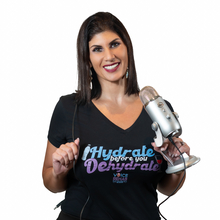
Kate Grandbois: Welcome to SLP Nerd Cast. We're here today to talk about something that we have really not talked that much about on the podcast. We have maybe one previous episode, one or two previous episodes where we have [00:02:00] touched on voice and voice therapy, voice rehab. Uh, but today we have the pleasure of welcoming a content expert who is going to push us even for.
Further into the voice rehab world. Welcome, Melissa Gracia Chisholm.
Melissa Grassia Chisholm: Hi, I'm so happy to be here. Thank you so much for inviting me. Um, as you know, voice is my passion. My company is the voice rehab, how fitting. Um, so I love all things, voice and airway, and we now say upper airway in the ENT voice world. So I'm really excited to share a couple of, um, tips and tricks for our listeners today.
Amy Wonkka: Thank you so much for sharing your time with us today, Melissa. We are very excited to get started and talk about this topic. Like Kate said, we really haven't had a lot of content on about voice and voice rehab. You're here today, you're gonna talk with us about diagnosis to therapy, elevating your voice rehab [00:03:00] skills.
But before we get started, can you tell us in our listeners just a little bit about yourself and your interest in the area of voice and voice therapy?
Melissa Grassia Chisholm: Sure. So the journey started with my own voice. I have been studying my own voice since I was about 13 years old. Um, I'm a singer first, so learning how to manipulate my own voice has definitely helped in the voice world.
But by no means do you have to be a professional singer in order to be an amazing voice. Therapist. Um, I studied my own voice at Berkeley College of Music in Boston. Then went on to a Delphi University where I really got to wear both hats in the voice world of singing, but then take speech pathology classes in undergrad.
And I had a professor there that was really into opera and he would kind of sign off and sneak me into all of those prerequisites. [00:04:00] Awesome. And I was like, this is it. This is what I'm gonna do. And I went on to Nova Southeastern University down here in South Florida where I have stayed and really built my career, but it hasn't always just been voice.
I really am a medical SLP. I have worked in acute care. I have worked in the rehab setting, home health, private practice. And my job before this in corporate healthcare was being the manager of Cleveland Clinic, which is a hospital, also an ENT clinic, where I really got to dive deep into the world of voice where I would assist the laryngologist with all of the vocal cord procedures.
I was her endos. For all the vocal cord injections and biopsies. So I really got to, um, see people from the inside out, no pun intended. Um, but I [00:05:00] got to further my skills in laryngeal pathologies, really seeing a variety of cases, um, that sometimes didn't even need therapy, but understanding the mechanism would help me lead them to the therapy.
That's
Kate Grandbois: wonderful. Um, I have to say, even as you're speaking your, the way that you pronounce, you have such an intentional way of speaking. I feel like I can tell that you're a professional singer, and now I just feel like I'm, I'm not going to articulate anything very, very well at all. So I, I, it's a really interesting background and experience that you're bringing to the table.
Um, I always think it's, you know, it's a wonderful experience to be able to bring a personal passion into your professional world. Um, so that's great and I can't wait to hear how that experience has shaped your, um, lens as a speech pathologist in the voice rehab world. Before we get into that, I do need to read our learning outcomes.
I will try to get through that as quickly as possible. [00:06:00] Um, learning outcome number one. After listening to this podcast episode, participants will be able to self-report knowledge gains related to the importance of differentiating common voice pathologies. Listeners will also be able to self-report knowledge gains related to the impact of
vocal technique and rehabilitation, as well as reporting knowledge gains related to understanding the difference between balancing the subsystems of voice versus strengthening. If anyone who is listening would like to learn more about financial and non-financial disclosures or course disclosures, you can find that information in the show notes of the episode as well as on the landing page of our website.
If you are listening to this episode and hope to earn ashe's, CEUs, or certificates of completion, please follow the link in the show notes to our website where you will find the post, the link to the post-test. Okay, that. It's behind us now. It's behind us now. Yay. I'm very excited.
Amy Wonkka: Yay. Learning objectives done.
Um, alright. [00:07:00] Melissa, why don't you start us off by telling us just a little bit about that first learning objective. What are some of the common vocal pathologies that you might see in your work?
Melissa Grassia Chisholm: Well, I love starting us out that way because it's a great transition now that you've learned a little bit about me.
Thank you so much, Kate, for your compliments on my voice. I will say that I am not only a, um, voice therapist, but I'm also a client. You remember that commercial back in the day, right? So I have learned to really manipulate my voice in the speaking world because I. Had a vocal cord hemorrhage, um, that happened when I was leading with a band for worship, which is kind of church singing.
But nowadays the church singing is more, um, we'll say in a pop style and belting it out. And as a singer. When you're singing with a loud band, like with the [00:08:00] drums in your ears, you tend to push it. You tend to have muscle tension patterns, and sometimes that belting can become more of a screaming and a pathology for yourself.
So I suffered a pop just like that, and no voice came out as I'm leading the song. So my backup singers had to come in and take over. Well. Little did I know that this hemorrhage happened. So absolutely no voice at all. Couldn't sing, couldn't speak. So now financially, I'm a new clinician in speech pathology had just graduated and I needed to pay my student loans, right?
And so I said, well, this is going to be a journey. You know, I, I cried the. The vocal list, tears, meaning no voice as I'm crying, just the tears are coming down and, um, had really had a soul search and I realized that I went through this journey so that I can identify with my patients because it [00:09:00] was. My mission to become a voice specialist, but that didn't come right away.
I was in inpatient rehab and in the hospital. So one common pathology is to have a vocal cord hemorrhage, and that's gonna happen right away, like a pop. There's gonna be, um, an instant change of voice. And that's where the vocal cords are just bloody. And that is really one of the only times as we'll get further into how do we treat these pathologies.
But one of the only times that you really need vocal rest, total quiet, just let that bloody vocal cord heal and it goes through the same process as a bruise would. So it's going to turn purple and it's gonna turn green and yellow. And then we're gonna. Woo, be pearly white again. Um, so that's one. Another one is vocal cord polyps.
So polyps develop from people who smoke. We call that, um, like a rankings, edema, [00:10:00] and polyps can happen, and they're more of like a blister with fluid inside, whether that be a clear fluid. Or it can be a blood filled fluid. Now polyps usually happen just on one side, so polyps are commonly misdiagnosed by general ENTs that might not have that video.
S stroboscopy as vocal cord nodules. And that's the other one that I think most of your listeners have heard, whether they've suffered from nodules themselves being professional voice users and working around teachers and public education. Right. Or, um, we have assist, assist can happen on the same area of the layers of the vocal cords.
They happen on the edge and that needs to be removed, like. A laser removal, like a real surgery because you have to remove the whole sack. [00:11:00] Now, cysts will stay there. They usually won't go away on their own, and you'll need that kind of procedure. So, uh, we can have cysts all over our body. You know, some people get a cyst in their hand, or I had a cyst on my head removed.
If any of you. Uh, watch Dr. Pimple Popper, one of my favorite shows. Nobody can See Me.
Kate Grandbois: Cringing of Jesus. Correct?
Melissa Grassia Chisholm: Correct. That's one of the common, um, guilty pleasures I have is to watch that stuff. Right? So sis can happen anywhere. So nodules are gonna happen bilaterally. And that's how we know right away.
Ooh, they're, they're nodules. And nodules are like calluses. So calluses form because of maybe overuse. You know, I've had patients where I write down their schedule and all the times that they're using their voice 'cause they're like, I don't talk that much. And I say, well. Let's take a look at it on [00:12:00] paper and when they visualize what their schedule is like and their job demands and their mama demands and their extracurricular demands, it is just too much for the voice.
It's a delicate instrument, so those nodules can go away over time with some good voice therapy and um, doesn't really need any kind of a surgery. The polyp is a combination. Sometimes they'll just go away on its own. Usually the hemorrhagic polyp, the one that has some blood in in the pocket, um, might need a surgical removal.
We'll get into all that too. So those are the three lesions that we commonly see. Then there's something called granulomas, and that is, um, kind of on the back of the vocal cords. If you remember your anatomy. It's kind of like a v these vocal cords, and they happen back by the oid cartilages. So when we [00:13:00] pull those vocal cords together, it's kind of like a rubbing happens back here and granulomas.
Can be painful, can be irritating. Where the other lesions, they happen on the vocal cords and you don't feel them. There's no pain receptors on that top layer of the vocal cord. But back in the the vocal cord process, there are some receptors there and you're gonna wanna clear your throat all the time and try to figure out like, why does this feel so weird?
And we don't want to clear our throat. We treat, we tell our patients, don't do that. It's bad for the vocal cords. Well granulomas can happen due to chronic throat clearing. They also can happen due to chronic reflux as well as a post intubation trauma, so that intubation tube. Rubbing against those tissues in the back of their airway.
So that's one thing that we can treat as well. [00:14:00] And giving them that reflux, hygiene, vocal hygiene, most often, all of these common pathologies that we're seeing. Need voice therapy, and that's why we're here today to kind of shine a light on, Hey, what can we do? The other common thing, um, that we see is a neurological based process, which would be vocal cord parsis or vocal cord paralysis.
That means when the vocal cords are apart, one of them is not working. Or is slower to work, and that's a nerve related damage. So what could cause a nerve related damage? If someone maybe is, let's say 27 years old and never had a surgery, clearly never had a stroke, doesn't have anything else neurological going on.
Why do you have vocal cord paresis? Well, some people. Don't know that [00:15:00] when they have a virus that can attack our nervous system as well. So we saw a lot of this in the clinic after COVI. So post COVID, I, we know that's a virus. We're seeing people with voice problems, and it wasn't just because of their air.
It wasn't just because of their lungs. When we finally got in and gave a a video, s stroboscopy, or even just a flexible endoscopy, we saw one of those vocal cords isn't moving as well as the other. This can happen after a flu. This can happen, um, after any kind of upper respiratory infection. So you might be struggling to project your voice and you don't feel sick anymore, but the voice quality of roughness, of fatigue, of maybe some horse breathy, vocal quality is still lingering, but there's no sickness.[00:16:00]
You need to go see a speech pathologist or an ENT to take a look from the inside. This can also happen after a thyroid surgery. We know that the thyroid gland covers the, um, larynx right on the top side, so you're not gonna see the thyroid when you scope, but it's, it's between the skin. And the thyroid cartilage.
So any kind of a surgery or a removal of a nodule can be more at risk for nerve damage because the recurrent laryngeal nerve will wrap around and throughout that gland. So it's not that the doctor might have, you know, our terms, we might say the, the doctor snipped my, my nerve, he severed my nerve. That doesn't usually happen.
We have wonderful surgeons and wonderful procedures, but nerves don't like to be touched. So when you [00:17:00] start to push that nerve to the side so the surgeon can get in and do what he needs to do or what she needs to remove, then that nerve. Goes back and might need a little help to start working again. And that's what innervates the vocal cords to move to abduct and adduct.
And those are the most common pathologies that I see in my office. Along with your common neurology pathologies like Parkinson's Disease. Parkinson's disease is something in speech pathology that we see quite often, and we have these common treatments like LSVT or speak out and they call. First for imaging if possible.
And I'll tell you, it's very important to get imaging of the vocal cords and the vocal function before you start the treatment because this is an area of [00:18:00] my specialty and I have access to, um, all of this imaging. We actually conducted a retrospective study this year, and we presented it at The Voice Foundation, the incidence of laryngeal pathologies in the Parkinson's population during fees, and we know fees is fiber optic.
Endoscopic evaluation of swallow. A lot of the times these Parkinson's patients are coming in with a swallow problem too. So we say just do feast. 'cause then I can look at your vocal cords and I can see your swallow function. So we're killing two birds with one stone and we've found even cancer. I'll tell you, I had a patient one year doing voice therapy with another clinician that might have not been in tune with ear training or up to date on some CEUs, if you know what I mean, which is why we [00:19:00] have this podcast.
Thank you so much. Right. Bravo to nerd cast, but they were doing an entire year of speak out LSVT, and I said, well, did you get any better? He said, no, I actually am getting worse. I said, well, I'm so glad we're gonna do the swallow evaluation 'cause we need to see those vocal cords. She never sent him to an ENT when I went in there.
Huge lesion. It was even black on one vocal cord. So stiff. No vibration full of cancer. Poor guy. Oh my
Amy Wonkka: gosh. Oh my goodness gracious. So I, I have maybe a silly question and you, you, you, what you just said gives me hope that it's not as silly as I think it might be. When I was in grad, grad school long ago, I feel like I learned we should never treat a suspected voice disorder without some sort of [00:20:00] evaluation by an ENT or an SLP who's able to do some sort of imaging.
Melissa Grassia Chisholm: Yes.
Amy Wonkka: That that's real. Right? That's a
Melissa Grassia Chisholm: real, it's a real thing because of these, um, pathologies and really voice is one of the things that you can perceptually evaluate. But someone who sounds breathy could be leuk plana. Could be cancer, could be nodules, could be just atrophy of the vocal cord 'cause they're 90.
All of those things could have the same perceptual quality. But unfortunately during COVID, because we did not have the opportunity to get into the clinic. And people were very scared to be sticking, um, cameras up people's noses in the airway filled COVI environment, right? And, and pulling that scope out and just sprinkling COVID fairy dust everywhere in the air, right?
Nobody wanted to do it. So they changed [00:21:00] some of their protocols and they say that it's okay to proceed if we don't have that imaging first. So I'm hoping and praying that during this podcast we can advocate for our patients and we can really be the sticklers and drive it home that we need to, um, operate on the top of our license and have imaging first, because never would we go into an uh, an.
Emergency department and say, oh, I'm having a droop on my face and this hand is, is not working, and I, you know, got dizzy. And they would never say, well ma'am, you're having a stroke. They wouldn't just say that even though we have all the symptoms of the stroke, they would absolutely first give you an MRI.
Or a CT scan, which is why we speech pathologists need to advocate for our instrumentals. They're very important for our plan of care. Imagine I started to take this patient on again, [00:22:00] and how bad would I look if he didn't get better? So I want my patient to be successful. I wanna make sure that there's an opportunity for him to get better and that my plan of care is tailored to his goals also for his quality of life.
And also he's ti for what I would like to do with him. That's my little horn that I'm gonna toot.
Kate Grandbois: You've said so many things and I, I, I feel like I have to kind of reflect back to you how much I have learned in like, what has it been? Seven minutes, eight, eight minute, 20 minute, 10 minutes. I mean, I, I, everybody who listens to this podcast knows, I dunno anything about voice.
I took a class 20 years ago in graduate school and never, I haven't used that information since. So this has been an incredibly helpful refresher kind of. Creating the playing field or, or the landscape of, um, you know, what this is like for those of us in the wild, and it's bringing me your, your comments about advocacy [00:23:00] are bringing me to a question.
Related to the speech pathologists who may or may not be like me working in a school who maybe have retained more information from graduate school than I, than I have at this point in my professional life. Well, it was just yesterday. Yeah, exactly. Totally fine, totally fine. Spring chickens young, no big deal.
But, but, but you know, for those of us who are working out in the wild in schools and not interacting with voice related pathologies or voice related symptoms every day. When we have a patient in the classroom, in the private practice clinic that is not voice oriented and we suspect, we hear, you know, the, the rumblings of a voice disorder or, you know, we hear some, a vocal quality that is harsh or breathy.
I mean, is making a referral for imaging enough or are there other things that we could be doing to help advocate for those, for those individuals?
Melissa Grassia Chisholm: I love that question and I think that it's really [00:24:00] important to build relationships with wherever you are with your local ENT office or your voice, specialized speech pathologist.
'cause there's things that's gonna happen for you guys who. I'm talking you guys, like if you're in the schools and you have this super large variety of clients that you see and kids you see, you've got one, the stutterer over here, you've got the expressive language over here, delayed, and now you've got the random voice kid.
And then, oh, let's just stick the autism in the middle there. OMG. You guys are amazing. I don't know how you know so much about so much. I only know voice, you know? I know. Voice and swallow. That's about it. You know, so you, I'm with you
Kate Grandbois: there. I only know what I know. I don't know anything else.
Melissa Grassia Chisholm: Yes. So it's really hard to be in these situations, especially the schools.
So there are things that you can do. I collaborate a lot with my pediatric [00:25:00] speech pathologist. What they would be doing is kind of, you know, working on the articulation or working on the pragmatic. And then they'd say, you know, I think that you should go to Melissa for just the voice and then you'll still continue with me.
So of course, you know, that ends up being a little financially difficult because you'd have to do private with somebody else as well. 'cause insurance wouldn't pay for two speech pathologists, you know? So I think that you as. A general speech pathologist in the pediatric world can do some simple vocal exercises without imaging.
Um, I think it's important before you start those that they do see an ENT, because if this is something that's been going on for a long time, it's very hard to break muscle patterns, and I'll talk about that with balancing. But if it's a pathology, like a polyp or a cyst, imagine you just keep going with these [00:26:00] exercises.
It is part of now your therapy goals and you're getting nowhere with it. Well, that's because you set yourself up for failure because that patient is gonna need, um, you know, maybe a little laser surgery and it's not your therapy. It was fantastic. It was just that, you know, this pathology is not one that's curable with the therapy.
You know.
Kate Grandbois: Totally. Yeah. I, oh, sorry. Go ahead Amy. No,
Melissa Grassia Chisholm: go ahead. We can fight.
Amy Wonkka: Um,
yeah, I think that's such a good point. I mean, I think there are so many reasons you've brought up. There could be an undiagnosed cancer or something really significant that needs different medical management. There could be some underlying pathology that is not amenable to voice therapy and needs, again, medical management.
Um. And there is the piece of if you are somebody, like if I got a client in, in my caseload in the schools, I would not have the expertise. Even if I, the client came with imaging, I wouldn't necessarily know where to start. So [00:27:00] having some guidance, um, in a treatment plan that's coming from somebody with a little bit more expertise, I think would be really helpful.
And I wonder if this helps segue us into that second learning objective, just talking about sort of that impact on vocal tech. Technique and rehab. Rehabilitation. Um, and if you could talk us through some of those components, that would be wonderful.
Melissa Grassia Chisholm: Sure. I think we're gonna need a part two. Ladies.
There's so much out there, right? I'm just, sounds good to me. I love it. I love it. So, um, it's very important when you start with the technique. Am I treating a balance issue where I have muscle tension or am I treating a strength issue where there is a Parsis paralysis or with my little old people, I call them the LOLs, the little old ladies.
Right. They have a little atrophy, so they've got that GLO insufficiency. So we need to weight lift. We need a strength train for them. Very different than if I'm balancing like the [00:28:00] yoga of it all. And I'll tell you, most pathologies of the larynx, we'll need a little balancing. So even if I have, um, a Parsis and if I have nodules or if I have anything else that I've been talking about.
There's always gonna be a compensatory component of muscle tension there. Um, even singers who are having a hard time reaching their higher pitches, that's all gonna need a little rebalancing. Um, and so if you don't know laryngeal massage, that is a great place to even just catch your hands on the neck and kind of feeling like, oh, if I, if I see a kid and they're like this,
Kate Grandbois: I'm like
Melissa Grassia Chisholm: compulsively now
Kate Grandbois: wanting to touch my neck.
Melissa Grassia Chisholm: Yeah, totally. And I, I touch everybody. We even have a massage table in my office. It's just so important. But it's also a bandaid. So people will say, Hey, I'm coming in for the massage. And you're like, well, it's not really a massage. We need to, you know, [00:29:00] train your behavior to, you know, but, um, a little bit about loosening up those muscles and then you can get to the balance.
Sometimes those vocal cords are a little off, um, off balance. We need to get the back pressure onto the vocal cords, which we have heard in our textbooks of the semi occluded, vocal tracked exercise, right? S-O-V-T-E. That's what I love to say. So, um, an easy one for everybody to do. Is the straws in the water and the bubbles and the kids are gonna love it and they're gonna understand it because why?
Well, science wise, we're getting that back price pressure by giving a little resistance with the water. And then also we're able to, um, make that semi occluded position where their air is flowing through a more tight circle. Um, so it's not just spread out, right? And then the kids are gonna [00:30:00] be able to see the bubbles.
Not just the kids. I've got a lot of people who kind of talk like this in a glottal fry, and they're always holding their breath, right? I hope this comes across on the podcast part, but you want to blow bubbles while giving a little bit of voice, so if someone's holding their breath, you're not gonna be able to see your bubbles.
So for those watching on YouTube, you would kind of go like this. For those listening, she's blowing bubbles into her water.
Kate Grandbois: Oh, you can hear it.
Melissa Grassia Chisholm: And voicing
Amy Wonkka: and voicing,
Melissa Grassia Chisholm: voicing and book. Interesting. Interesting. Okay. Absolutely. And I have a video on YouTube as well under my name. You can put it on, totally Copy me.
Give it to your patients to practice at home. It's all free on the YouTube and there. It's efficient and nobody's gonna get hurt from blowing bubbles. So that's a great one to start with. And then [00:31:00] learning how to turn the voice on and off and teach somebody who has a higher level of, you know, cognition that we turn our voice on and off for certain sounds.
Just like an S and a z. Same placement, right? Voiceless on the s and z, voiced on the Z. Well, we need to turn the bubbles on and off in the water. Can you do that? So voiceless,
why is that important? Because our vocal chords turn on and off so quickly like. The sound, the, the, the word peanut butter, right? It's not peanut butter, it's peanut butter. So the P is silent, the B is voiced so quick, those little vocal chords. Then you can also do little glides, little hills to stretch and contract the [00:32:00] voice, because we don't wanna sound like this in a monotone voice.
This is not fun, right? And so we want them to be able to be free to inflect. So we might go. Kids would love this. I'm enjoying watching you do it. It's very entertaining. Right? And then we can kick it up a notch and take the straw out of the mouth, because now how do we carry it over into speech? Right?
I'm gonna show you, we're gonna go into an Ooh, after we take out the straw. Oh boy. Ooh. Oh, look at that. Our air is still flowing and now we didn't go. We can feel that it's in our throat now and now we can think of a word that might start with a W, like one as the air continues to flow. And then we can have flow phrases, just chat.
GPT, it. I gotta love the I, the ai these [00:33:00] days. They do all of the, uh, work for us with all of our W loaded sounds, right and words. Yeah.
Kate Grandbois: Oh my gosh, this is so interesting.
Amy Wonkka: This is great. This is such a good example. I feel like all of the content that you've been talking about so far has been, you've made it feel very approachable, even though it's a topic that feels way out of my wheelhouse. So I have a question about when you're doing that activity, when you're starting off with a straw and you're working on, are you working on the breath, are you working on the voicing?
Are you working on all of those parts together? I love
Melissa Grassia Chisholm: that. That brings me to some more education for our patient. What I love to start my patient with is teaching them about the subsystems of speech. So we need to look at the gas tank. That's our first subsystem. I tell them, you know, that's you breathing, that's your diaphragm, your lungs, you're filling up your gas tank.
Right? And I don't spend too much time on [00:34:00] breathing because naturally. They're here, they're alive. They must be breathing. So I don't spend too much time. 'cause they start to do funky things. I just want them to breathe and I tell them, so that gas tank and that breath is activating the bubbles, but it's also activating your vocal cords, which is your neck.
Subsystem of speech. So the air goes up to the vocal cords, and that's called your atory system. So we've got respiratory system that activates the atory system, vocal cords, open and close, and then they stretch. It become long and thin for high pitches, and they contract to become short and fat for the low pitches.
Which brings me to the next system, the third system, which is your Atory system. Everybody's heard of resonance voice therapy, but what the heck is it? Well, [00:35:00] when we think about resonating in our sound filter, we think about these cavities and singers like to call it their mass. And that's kind of where the cheeks are by the nose, you know, sinuses.
And when you get all stuffy, it all feels like there's pressure in your cheeks. That's where we want the sound to start to vibrate or vibrating on the lips, so that I like to explain that to my patients as when I sing a musical theater style, I would sing somewhere over the rainbow. Very nasally forward front.
But when I, this is the first time we've had an opera
Kate Grandbois: singer on the show. I'm like, I'm like floored. Let's have some more. Yay.
Melissa Grassia Chisholm: So that's the theater side of Somewhere Over the Rainbow. Here comes the opera side. My throat is becoming stretch and the resonance is gonna change. Ready? Psalm somewhere over the rainbow.
So that's very open throat. And I did not change [00:36:00] the song, the pitches. I didn't change my breath support, but it sure did sound different. Well, that's what I'm gonna teach you. I'm gonna teach you how to utilize your resonance, how to open up your throat to make your voice more efficient so it's not all coming from here.
And that's all three exercises in this one little. Drill with the straws and the bubbles. So it's a perfect way to start. Okay, so we've got the balancing going. We're having fun with the bubbles. We can even sing songs in the bubbles. Perfect. Keeping the air flowing. Now, if we have something that we need to treat with strengthening, how do we do bicep curls in the vocal chords, right?
It's kind of like physical therapy for your voice. Well, the diagnosises that would need this is vocal cord parsis, so that vocal cord can come over and touch or vocal [00:37:00] cord paralysis or atrophy, vocal cord atrophy. And there's only two exercises that I like to teach my patients for this. And that's forte formation, resistance training exercises, that's for both of those diagnoses.
And you wanna use a loud, energized voice. Now you can take a special course on that, and it's an entire day with. Edie Hapner and Aaron Ziglar, check out their research. They're fantastic people in our voice world, and I have a little video on YouTube that you can follow through as well. So you're gonna use a strong voice that ha.
And that's creating that glottic efficiency. Then you're gonna be stretching up and down. Oh,
is this sounding like LSVT? Or like speak out. Right? Very [00:38:00] familiar. And then you do that a couple times, and then you're gonna take phrases that this patient might say every day. Like for me, I tell my boys, stop fighting with each other. Because I have two little boys, so I would say boys start fighting with each other, right?
And I would shout it out like I'm calling out to the other room. Then I would go through all my phrases that way, like calling out over a fence, and then I would go down in a pitch, boys stop fighting with each other. So it's that high pitch and that low pitch, and that's physical therapy for your voice.
Now there's way more to this, so I highly recommend you go and check them out. They're fantastic. And you'll learn more about the anatomy and physiology about what that's doing. And then the other exercise is called vocal function exercises. That's by Joseph Stempel. And that is a softer approach, more of a [00:39:00] static energy where we're sustaining pitches.
And the research there is. What pitches would be, um, more acceptable for a woman's voice in conversation. And it gets a little musical, so you wanna have a pitch pipe and holding out the different pitches. We start at middle C, which might mean nothing for your patient, but when they download an app.
Called Pitch Perfect, it's free and you can just tell them, touch the middle C, touch the C, and then it plays this pitch. And you would hold that out like this.
So the object of that is to really sustain that pitch and, um, keep that those. Muscles in a static position, and then you're also training that semi occluded vocal track position, feeling all the vibration and the mask like we just talked about for resonant voice therapy. So very [00:40:00] important that we know how to differentiate the difference between I need to balance the voice.
Or I need to strengthen the voice because someone who has nodules shouldn't be holding out a big strong ha 'cause that's gonna be, um, damaging or irritating their lesions that need to heal.
Kate Grandbois: This has been incredibly helpful. I feel like, I honestly feel like I have learned more talking to you for half an hour.
Then I. I don't wanna poo poo my voice professor in graduate school, but this has been a very intense and very knowledge filled conversation. Yay. I wonder if you could share a little bit just in our last minute or two for anyone listening who is new to this area who would like to learn more about this area, or is even thinking of a client that on their caseload who they suspect nodules or, or maybe even they've had, um, some imaging done.
Where can clinicians go from here? What is the next best step? [00:41:00]
Melissa Grassia Chisholm: So if we want more continuing education in such a niche area as voice, like you said, that's like the scary class that you just pray that you pass and then you can just put it away on the shelf again and not have to, you know, use it every day.
And it's my mission to make it more approachable, make it more fun, more inviting, and I highly recommend getting involved in some kind of a, um. Coursework continuing education such as Med Bridge. They actually have some of the voice gurus teaching these techniques. Also, the Med SLP Collective, they have some voice gurus teaching these techniques.
I don't want to just publicize my course, but I have a very. Tailored concierge kind of mentorship [email protected], where you pay a monthly [00:42:00] subscription, but you get me one-on-one and we can troubleshoot weekly any kind of patients, or if you want to actually try some techniques with me, but also has all my videos.
Also the handouts that you might wanna work with your patient. And then I have a whole course on video stroboscopy you can go through. And the big one for my clinicians is how do I write a voice note because it's so subjective, right? Um, but there are ways to be measurable with patient reporting outcome measures.
So I have smart phrases in there for you too, where you can just copy and paste what I have on the word doc and it's kind of like that, um, gold bank and you can tweak it for your patient. So get a mentor. I think having that one-on-one with someone. Or even going to observe in an ENT clinic is fantastic.
And stay tuned on the [00:43:00] Nerd Cast 'cause I'm sure there'll be so many more voice, um, podcasts for you to choose from. And you can get that concierge type of education by listening to the podcast.
Kate Grandbois: Thank you so much. Those, you said so many nice things about us. All we did was show up and you taught us a bunch of things.
So the the thanks really goes to you. Thank you. Um, we are so grateful for your time and to anyone listening who, um, was walking or jogging or running or whatever, uh, was very athletic list of things or folding laundry or laying around with your eyes closed. All of those things are fine. And if you were, list point is if you were listening and there were.
References or resources that were listed. All of those will be in the show notes for you to find later, as well as links to YouTube channels and other ref other resources as well. Um, again, if you would like to use this episode for Ash to CEUs, we, uh, have a link. To our website to purchase that. Uh, a quick list [00:44:00] of thank you.
So we like to thank our team for making this podcast possible. Thank you to Dr. Anna Paula Mui, who makes our ashes EU possible. Tegan or Hern, our production assistant who keeps the project alive. Darren Lopez. Our product, uh, our production assistant. Who produces all of our course materials and web production.
Tracy Callahan and Dr. Mary Beth Schmidt. Mary Beth Schmidt, who helped to manage our advisory board and help make our peer review process better. Um, our advisory board who engages with our content and elevates the quality of our production. Uh, and last but not least. Thank you so much, Melissa, for joining us today.
This was a really, it was a real treat. Having you. That was great.
Melissa Grassia Chisholm: Oh, thank you so much. I hope to see all of you in the virtual world. Yeah, and please reach out at any time on Instagram or Facebook, whatever it is. I am personable. I'm a real person, and I'm here to help
Kate Grandbois: with a beautiful voice on top of it all.
Thank you, education and entertainment. Yay. Thanks [00:45:00] again for being here.
Outro
Kate Grandbois: Thank you so much for joining us in today's episode, as always, you can use this episode for ASHA CEUs. You can also potentially use this episode for other credits, depending on the regulations of your governing body. To determine if this episode will count towards professional development in your area of study.
Please check in with your governing bodies or you can go to our website, www.slpnerdcast.com all of the references and information listed throughout the course of the episode will be listed in the show notes. And as always, if you have any questions, please email us at [email protected]
thank you so much for joining us and we hope to welcome you back here again soon.
.